A 10-MINUTE PRIMER

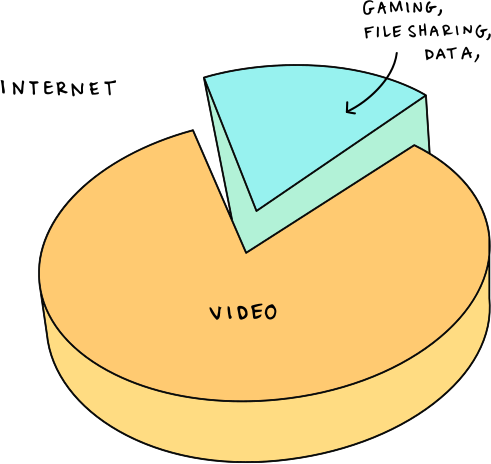
Today, roughly 80% of all internet bandwidth is consumed by video.
It’s already the dominant share of all internet traffic — and AI is making it even more dominant. A growing wave of applications now use AI models to create, transform, and interpret video in real-time, requiring continuous GPU inference on every frame.
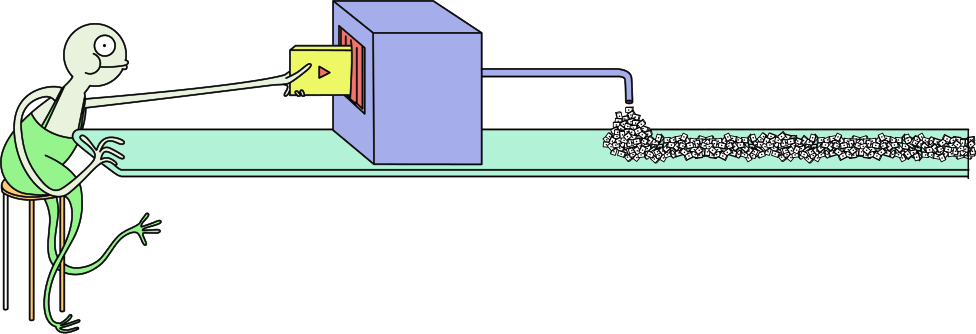
But running AI on video is compute-intensive — and expensive. Real-time video AI requires continuous GPU inference — processing every frame through AI models as it arrives, with no room for delay. Centralized GPU clouds aren’t built for this. They’re optimized for batch processing — not the continuous, low-latency inference that real-time video demands.
AI-generated worlds, real-time video analysis, AI-driven avatars and agents — demand for these applications is accelerating. The developers building them — creative technologists, startups, independent builders — need GPU providers that are fast, affordable, and always available.
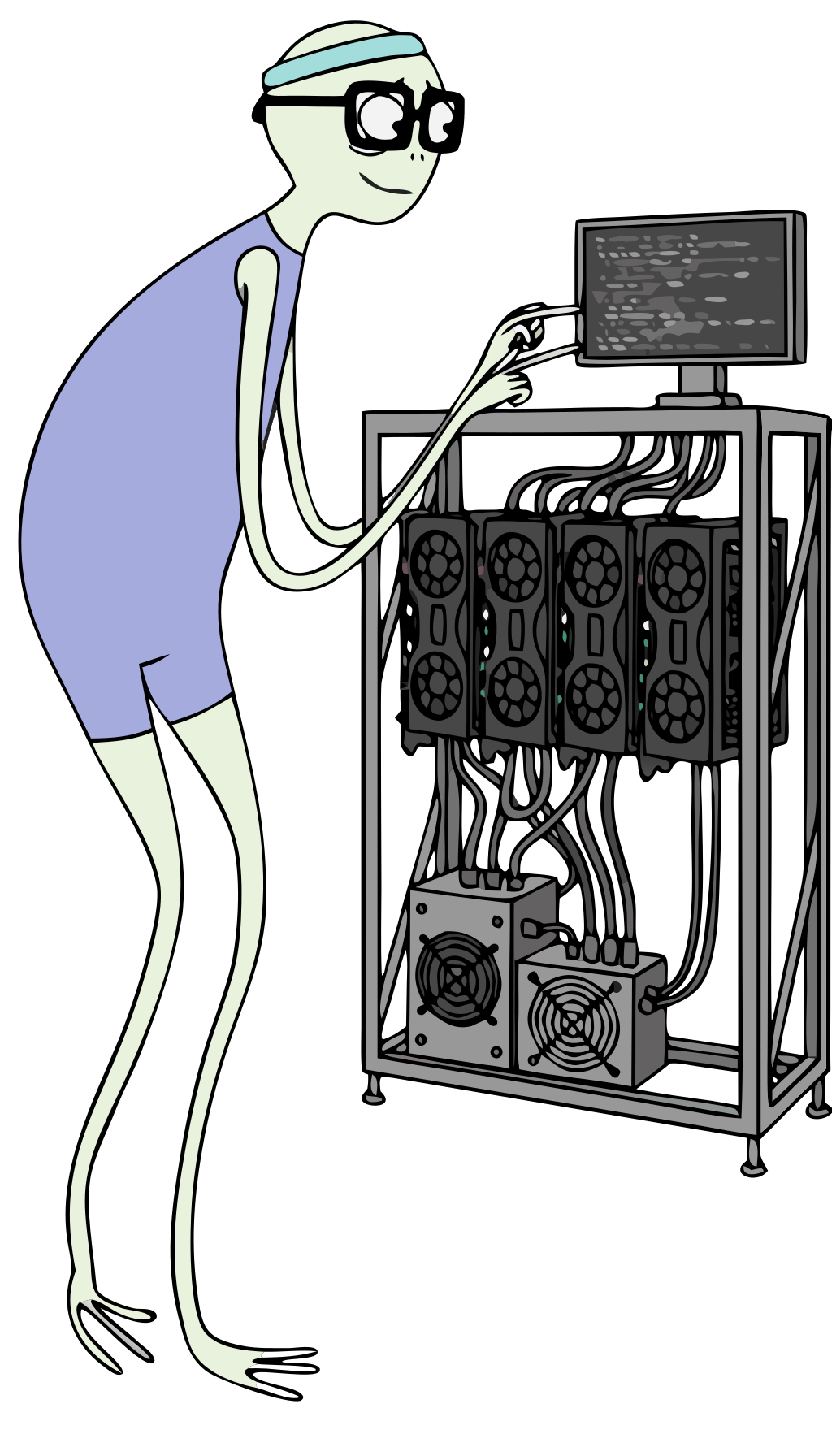
Livepeer is an open network where independent builders deploy AI solutions on community-operated GPU infrastructure.
What is Livepeer?
Livepeer is the open network for GPU-powered video. It coordinates a global pool of independent GPU operators to power real-time video AI — style transfer, object detection, generative video, live streaming, and more.
The network is community-operated, built on Ethereum for coordination, and 60–85% cheaper than centralized cloud alternatives like AWS, RunPod, and Fal.
Who is Livepeer for?

Developers
building real-time AI video applications — generative worlds, live video analysis, AI avatars, interactive streaming — can use Livepeer to access GPU compute via simple API calls.

GPU Providers
contribute GPU compute to the network by running nodes. Anyone with capable hardware can join and earn fees for running AI inference workloads.
How does Livepeer work?
The network organizes around three layers: supply, protocol, and demand.
Supply: GPU Operators
Independent operators contribute GPU hardware by running Livepeer software. They earn fees for performing AI inference, transcoding, and other video workloads. Anyone with capable hardware can join.
Protocol: Routing & Coordination
The protocol matches workloads to the best available GPU. It handles orchestrator discovery, job routing, payment settlement, and quality-of-service checks. Built on Ethereum for transparency and permissionless participation.
Demand: Solutions
Solutions are the products and businesses built on the protocol — Daydream for creative AI video, Frameworks for live streaming, Embody for AI avatars, and more. They package network capabilities into experiences their audiences use and pay for.
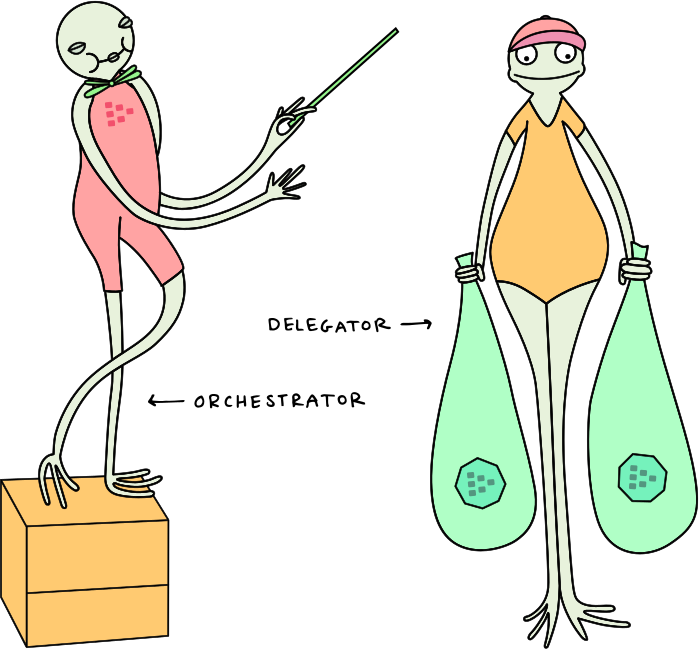
Two roles keep the network running: Orchestrators (GPU providers who perform the compute) and Delegators (token holders who help secure the network by staking toward reliable operators).
Orchestrators
In the Livepeer protocol, GPU providers are called orchestrators. They run the AI models — image generation, video analysis, style transfer, depth estimation — and earn fees in ETH or stablecoins for the work they perform. Anyone with capable GPU hardware can join the network and become an orchestrator.
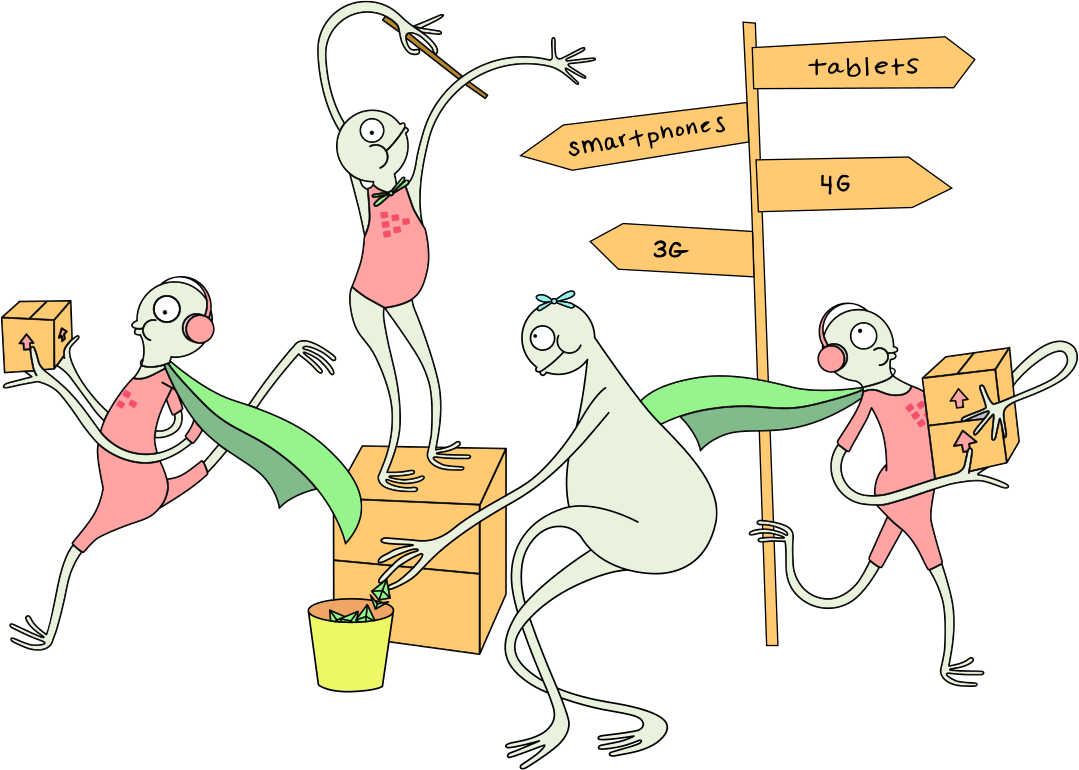
Sounds good, right? But wait, there’s a catch! In order to earn the right to do this type of work on the network, you must first earn or acquire Livepeer Token, also known as LPT.

Livepeer Token
The purpose of the Livepeer token (LPT) is to coordinate, bootstrap, and incentivize participants to make sure the Livepeer network is as cheap, effective, secure, reliable and useful as possible. In the Livepeer protocol, LPT is required to perform AI inference work on the network. The more LPT you own, the more work you’re able to perform on the network in exchange for fees.
As the network’s usage grows, so does the demand for orchestrators and thus LPT.
Of course, not everyone has the expertise required to perform the job of an Orchestrator. It requires serious technical knowledge and can be a full-time job. What if you’re a Livepeer tokenholder but don’t have the time or expertise to run the necessary infrastructure 24x7?
There’s another set of actors in the Livepeer protocol who play a less active albeit equally important role within the protocol — Livepeer Delegators.
Delegators
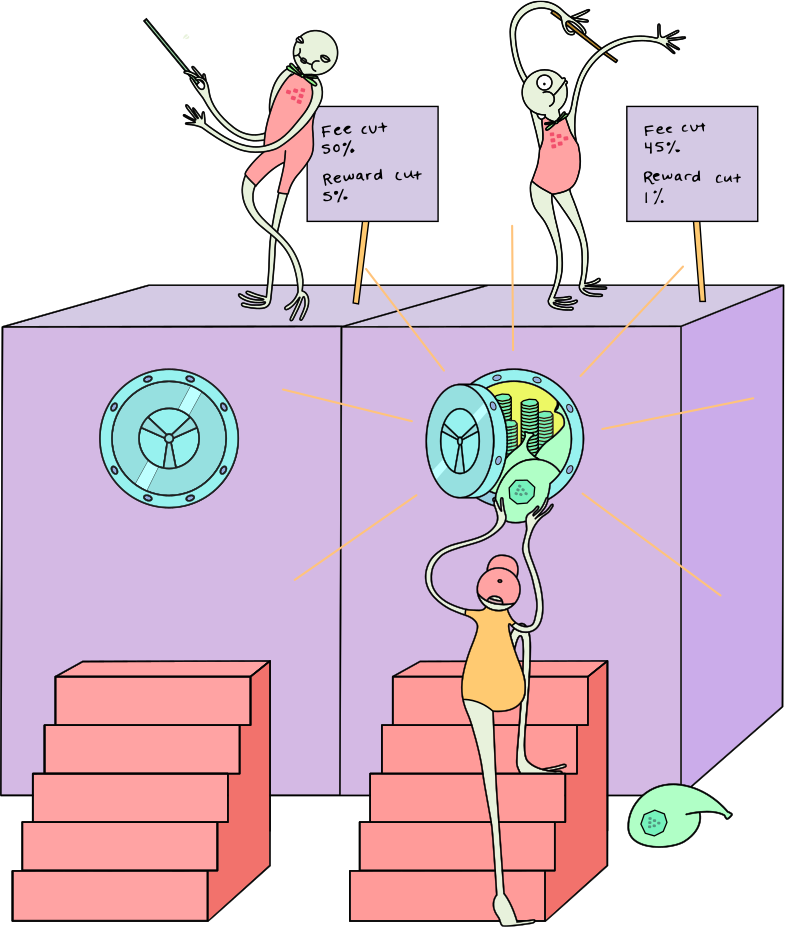
Delegators are Livepeer tokenholders who participate in the network by staking their tokens towards orchestrators who they believe are doing good and honest work. You can think about staking like putting a deposit down. When you stake, your tokens become locked up for a period of time and then you can take them back or stake them to a different orchestrator. By delegating stake to high-performing orchestrators, delegators signal to the network which ones are most reliable — the network uses this signal to route video streams to the best orchestrators, ensuring high-quality inference across the network.
You may be wondering, why would a Livepeer tokenholder choose stake their tokens? What’s in it for them?
Why It’s Cheaper
When a developer pays fees for AI inference on the network, both orchestrators and delegators earn a portion of those fees as a reward for ensuring a high-quality and secure network.
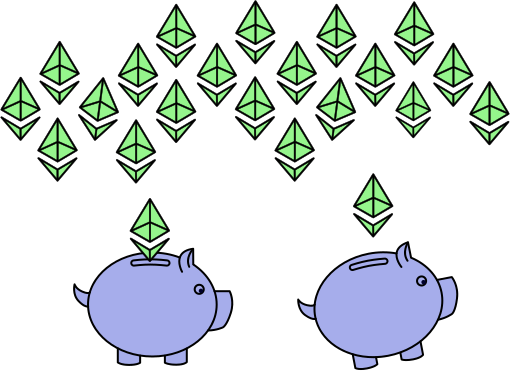
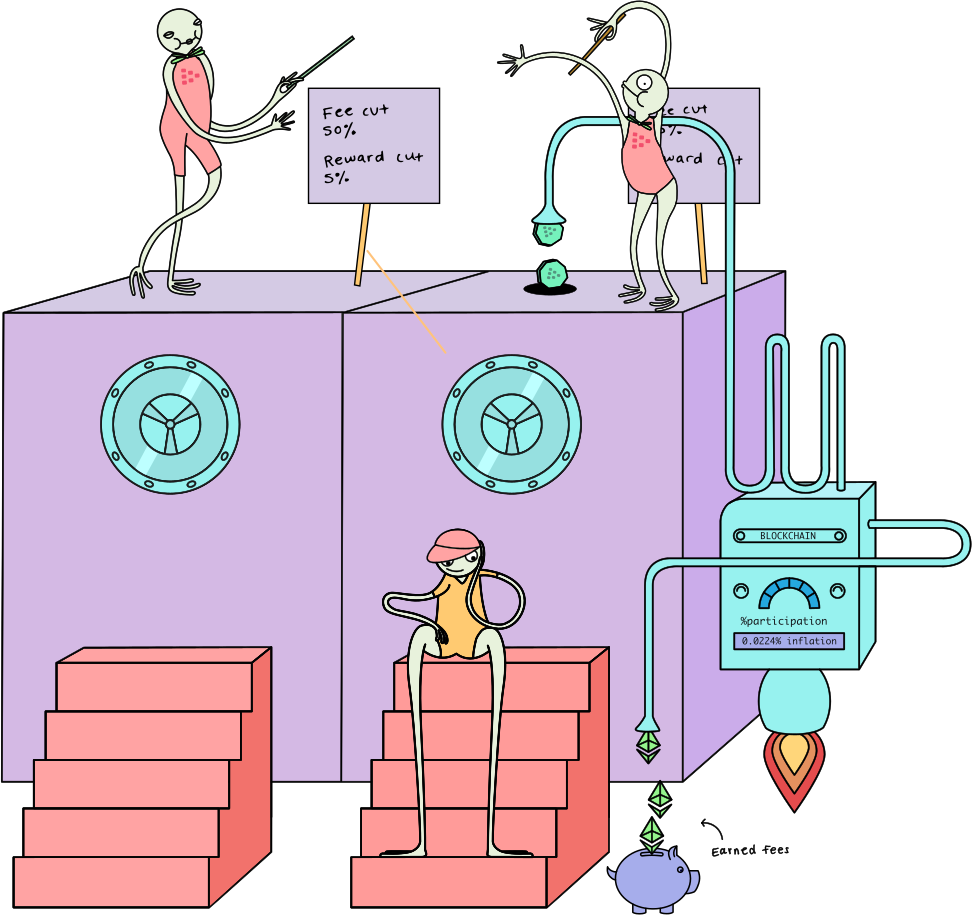
In addition to earning fees, Livepeer mints new token over time, much like Bitcoin and Ethereum block rewards, which are split amongst delegators and orchestrators in proportion to their total stake relative to others in the network.
This has the effect of growing network ownership amongst those who participate and shrinking it amongst those who do not.
It also gives orchestrators a powerful economic advantage over centralized GPU cloud providers since the value of the token offsets what they need to charge developers to break even. This is a key reason Livepeer can offer GPU compute at 60–85% lower cost than centralized alternatives.
51.40%
0.0513% inflation
This structural cost advantage is why builders choose Livepeer over centralized GPU clouds for workloads where cost makes the difference between viable and impossible.
Get Involved
Four solutions are shipping on Livepeer today: Daydream for creative AI video, Frameworks for live streaming, Embody for AI avatars, and a growing set of emerging projects. The network is open to builders, GPU operators, and anyone who wants to participate.
Want to build with Livepeer?
Join the builders and operators who run the network. Ask questions, share what you’re working on, and find collaborators.
Let's build
Want to provide GPU compute?
Run an orchestrator node and earn fees for performing AI inference on video streams. Contribute your GPU hardware to the network.
Provide compute
Want to participate in the network?
Get Livepeer token
Get tokenDelegate stake towards an Orchestrator
Delegate Stake